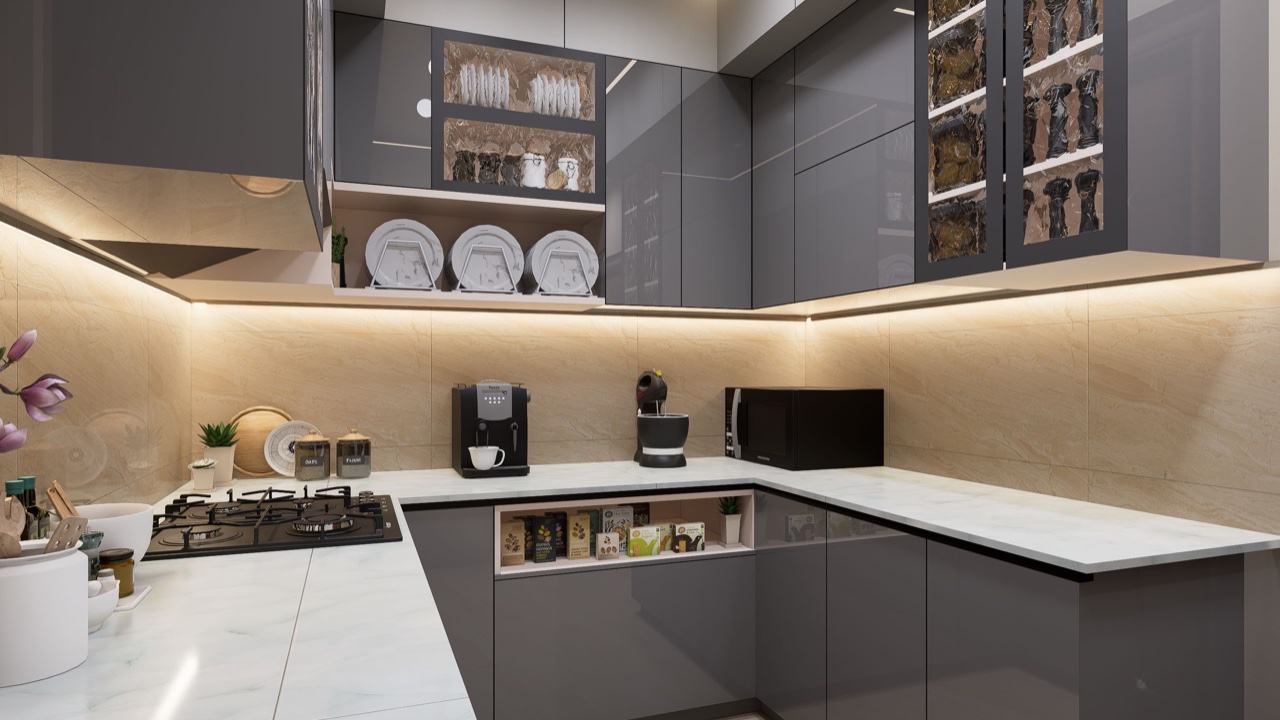
Almost everyone who has gone through a custom cabinet project has experienced some version of the same moment: the installed cabinets look close to the rendering, but not quite right. The grey is slightly warmer than expected. The wood grain runs in a direction that wasn’t obvious on screen. The cabinet faces look a bit flatter than they did in the 3D image, or the light doesn’t catch the surface the way the render suggested it would.
Most people blame the designer, or the rendering software, or their own failure to visualize correctly from a digital image. Occasionally they blame themselves for not asking more questions. What they rarely identify — because there’s no obvious moment where it happened — is the manufacturer’s role in the outcome.
What a Rendering Actually Shows
A 3D rendering of a kitchen or wardrobe is a model of intent. It shows what the space could look like if the materials, proportions, lighting conditions, and surface textures are all as the designer specified. What it doesn’t show — because the software doesn’t know — is how a specific factory will execute those specifications.
The rendering uses a material library: generic representations of wood grain, matte lacquer, gloss lacquer, stone, metal. These are visual approximations, not samples. The actual appearance of the finished cabinet depends on which substrate the manufacturer uses, which finish system, which grain direction for wood-effect wrapping, how the paint or lacquer is applied, and how surfaces behave under the lighting conditions in the actual room.
A rendering can show matte grey cabinets. It can’t show whether that grey will read warm or cool in a north-facing kitchen, or how the matte surface will look after six months of hand contact near the handles.
Where the Manufacturer’s Decisions Enter the Picture
By the time a rendering is approved and a contract is signed, the visual outcome is substantially in the manufacturer’s hands — and most manufacturers have significant latitude in how they interpret the specification.
Finish color is the most obvious variable. “Matte grey” is a direction, not a specification. Unless the contract references a specific RAL or NCS code and requires color-matching sign-off against a physical sample, the manufacturer will interpret “matte grey” using whatever is closest in their standard production range. That interpretation may differ from the rendering by enough to be noticeable without being different enough to constitute a clear contract breach.
Wood-effect surfaces carry similar ambiguity. The grain scale, grain direction, tone variation, and texture depth of wood-effect wrapping or laminate depend entirely on which film or paper the manufacturer sources and how it’s applied. Two manufacturers both quoting “oak finish” may produce surfaces that look meaningfully different in the same light.
Surface sheen is another variable that rendering can’t reliably represent. The difference between a true matte, a satin, and what some manufacturers call matte but produces in a low-sheen finish is significant in person and invisible in most digital previews.
The Approval Gap
The gap between rendering and reality is most often a function of the approval process — specifically, what samples or mock-ups are part of that process and at what stage.
In a well-managed cabinet project, the rendering is just the starting point. Before production begins, the buyer approves actual physical samples: a door in the specified color and finish, a panel showing the grain direction of any wood-effect material, edge banding shown in the actual application method. These samples are then held as production references, and finished cabinets are compared against them at quality control before shipment.
In a less rigorous process, the rendering is approved, a contract is signed, and the next physical touchpoint is the installed cabinets. By that point, if something looks different than expected, the leverage to address it is minimal. The manufacturer can argue that the rendering was always approximate, that the materials match the specification as written, and that any color variation is within acceptable tolerance.
What “Within Tolerance” Actually Means
Most cabinet manufacturers include language in their contracts about color variation, grain pattern variation, and surface uniformity being within acceptable tolerance. This language is not inherently unreasonable — natural variation in materials exists and tolerances are necessary. The question is what those tolerances are and whether they are defined with enough specificity to be enforceable.
A contract that says “minor color variation is within acceptable tolerance” has effectively given the manufacturer broad latitude. A contract that specifies tolerance against an approved production sample, with a defined approval step before full production runs, is meaningfully different. The first protects the manufacturer. The second protects both parties.
Manufacturers who have robust production standards generally welcome the sample approval process because they know their output will match. Manufacturers who resist it — who argue that samples take too long or add cost — are often protecting themselves from accountability at the stage where accountability matters most.
The Manufacturers Who Close the Gap
The difference between cabinet projects that deliver what the rendering promised and those that don’t usually comes down to two things: the manufacturer’s investment in production consistency, and the rigor of the approval process between design and production.
Production consistency requires real infrastructure — environmental controls in the finishing area, equipment that applies color and surface treatment reproducibly across large panel runs, quality control steps that catch variation before it ships. These require capital investment and process discipline, which is why they’re more common in manufacturers who have been in the business long enough to have built them.
The approval process requires a manufacturer willing to slow down slightly and create accountability checkpoints before large production runs commit to a finish direction. It adds time to the project but removes ambiguity from the outcome.
For a reference point on what this looks like from an established producer, the PIANO cabinetry website provides background on how a manufacturer with 20-plus years of production history and publicly listed company structure approaches production consistency — useful context when evaluating what a manufacturer at that scale actually commits to.
Before the Rendering Is the Moment to Act
The rendering approval is not the end of the visual specification process — it’s the beginning of it. What happens between rendering approval and production start determines whether the finished cabinets deliver on the visual intent or merely approximate it.
Buyers who know this ask for physical samples before signing off on production. They specify color codes rather than color names. They include sample approval language in the contract. And they choose manufacturers whose production process is built around delivering consistent results rather than interpreting loose specifications in their own favor.
The rendering shows what’s possible. The manufacturer determines what actually gets built.